
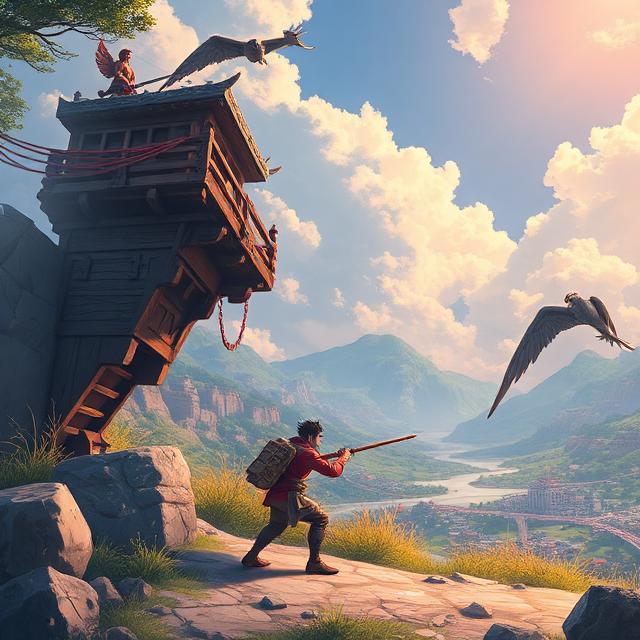
Density over size
Players can feel when a world is stretched. Empty space is not automatically bad, but empty space without mood, risk or anticipation becomes travel tax. The better approach is density: fewer locations, stronger identity and more reasons to remember where you have been.
A smaller map can feel huge if it has verticality, secrets, shortcuts and visible consequences. It becomes a place instead of a surface.
Traversal as language
Great traversal teaches players how to read the world. A climbable ridge, a glowing road, a moving train, a safe campfire or a dangerous valley can all act as sentences. The player moves through grammar, not clutter.
- Fast travel should support exploration, not erase it.
- Mounts and vehicles need meaningful terrain differences.
- Shortcuts should feel discovered, not handed out.
Readable landmarks
Strong landmarks lower cognitive load. When players can navigate by a tower, moon, crashed ship or purple storm, the world becomes memorable. This is why art direction matters as much as quest design: the map must be legible from a distance.
Quest design without clutter
Quest logs should help players make decisions, not turn exploration into admin work. Better quest design uses motive, location and consequence. The player should know why they are going somewhere, what kind of challenge to expect and how the world might change after they act.
When every marker screams at the same volume, nothing feels important. A confident open world lets some discoveries stay quiet.
The future of open worlds
The next wave of great open worlds will be more curated, more reactive and more confident about silence. Players do not need another giant map. They need a world that knows when to guide, when to hide and when to let the sky do the talking.